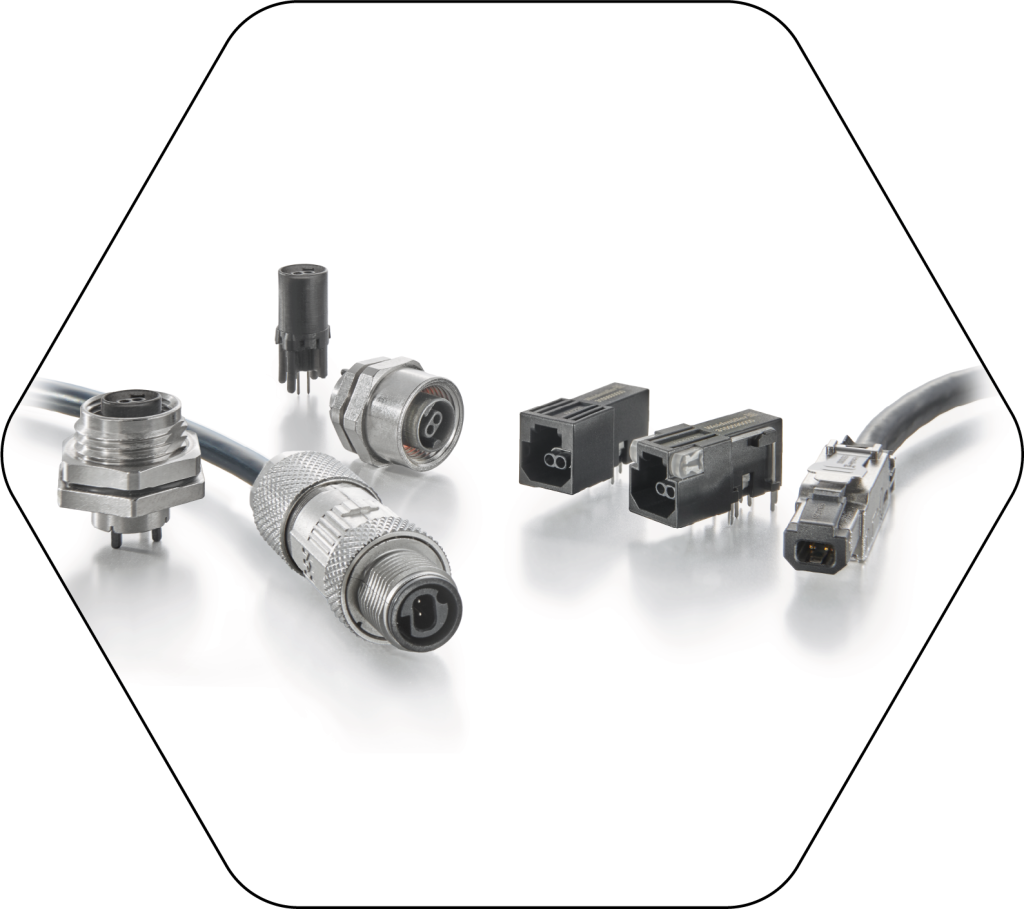
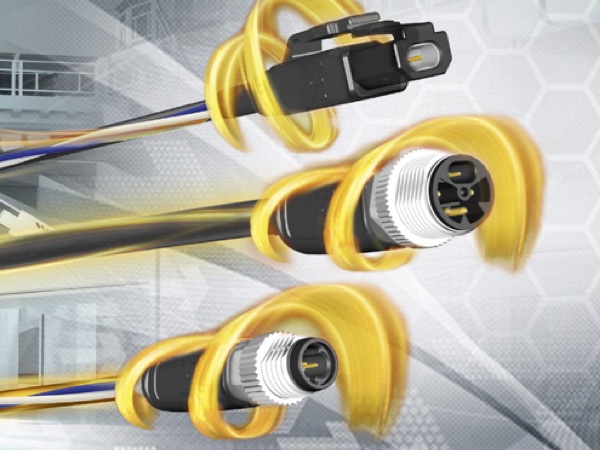
One connection, many advantages

White Paper: Single Pair Ethernet for Device Manufacturers

We would like to thank Weidmüller for producing this white paper.

Weidmüller Interface GmbH & Co. KG

Single Pair Ethernet (SPE) is a breakthrough technology that is revolutionizing Ethernet communication. What advantages, opportunities and possibilities does it hold for device manufacturers? This white paper addresses exactly these questions – and of course delivers the insights you need.

Outline


  1. How does Single Pair Ethernet work?
  2. What SPE standards and specifications are currently available?
  3. What are the benefits of SPE for device manufacturers?
  4. What prospects do SPE applications offer device manufacturers?
  5. What should be considered when designing SPE devices?
  6. What are the future trends and developments?
  7. Conclusions and key-takeaways

1. How does Single Pair Ethernet work?

Single Pair Ethernet (SPE) is rapidly emerging as a groundbreaking technology for modern industrial and commercial applications. By transmitting data over a single twisted-pair cable—instead of the conventional two or four pairs—SPE enables high-speed communication over long distances, supports multi-drop network topologies, and simultaneously allows power transmission via Power over Data Line (PoDL).

These features make SPE particularly attractive for applications where space, weight, and cost-efficiency are critical. Device manufacturers can use SPE to develop more compact, smarter, and more flexible devices without compromising on performance. At the same time, the network architecture is simplified and cabling complexity is reduced. Due to its versatility and efficiency, SPE is considered a key technology for industrial automation, building automation, robotics, as well as infrastructure and energy applications.

Key Benefits of SPE

SPE enables high-speed data transmission over long distances, ensuring fast and reliable communication. This is crucial for real-time data processing and control across various applications. Additionally, SPE supports multidrop configurations, allowing multiple devices to share a single communication line.

By reducing the complexity of the network architecture, SPE simplifies network management and maintenance. It allows Ethernet connectivity to reach sensors and field devices directly, minimizing the need for gateways and intermediary components.

SPE’s capability to transmit both power and data over a single twisted pair of wires eliminates the need for separate power lines. This is particularly useful for supplying power to remote sensors, actuators, and IoT devices.

SPE significantly reduces the amount of cabling required, leading to lower material and installation costs. This efficiency is especially valuable in environments with extensive wiring needs, such as manufacturing facilities and large commercial buildings.

2. What SPE standards and specifications are currently available?​

Single-Pair Ethernet standards refer to a set of guidelines and specifications established for the use of Ethernet technology over a single pair of twisted-pair copper wires. These cover all aspects of SPE, such as Ethernet interfaces, cabling, and data transmission. The standard for SPE is defined as IEEE 802.3. This specification defines the technical parameters for Ethernet-based data communication over a single cable pair.

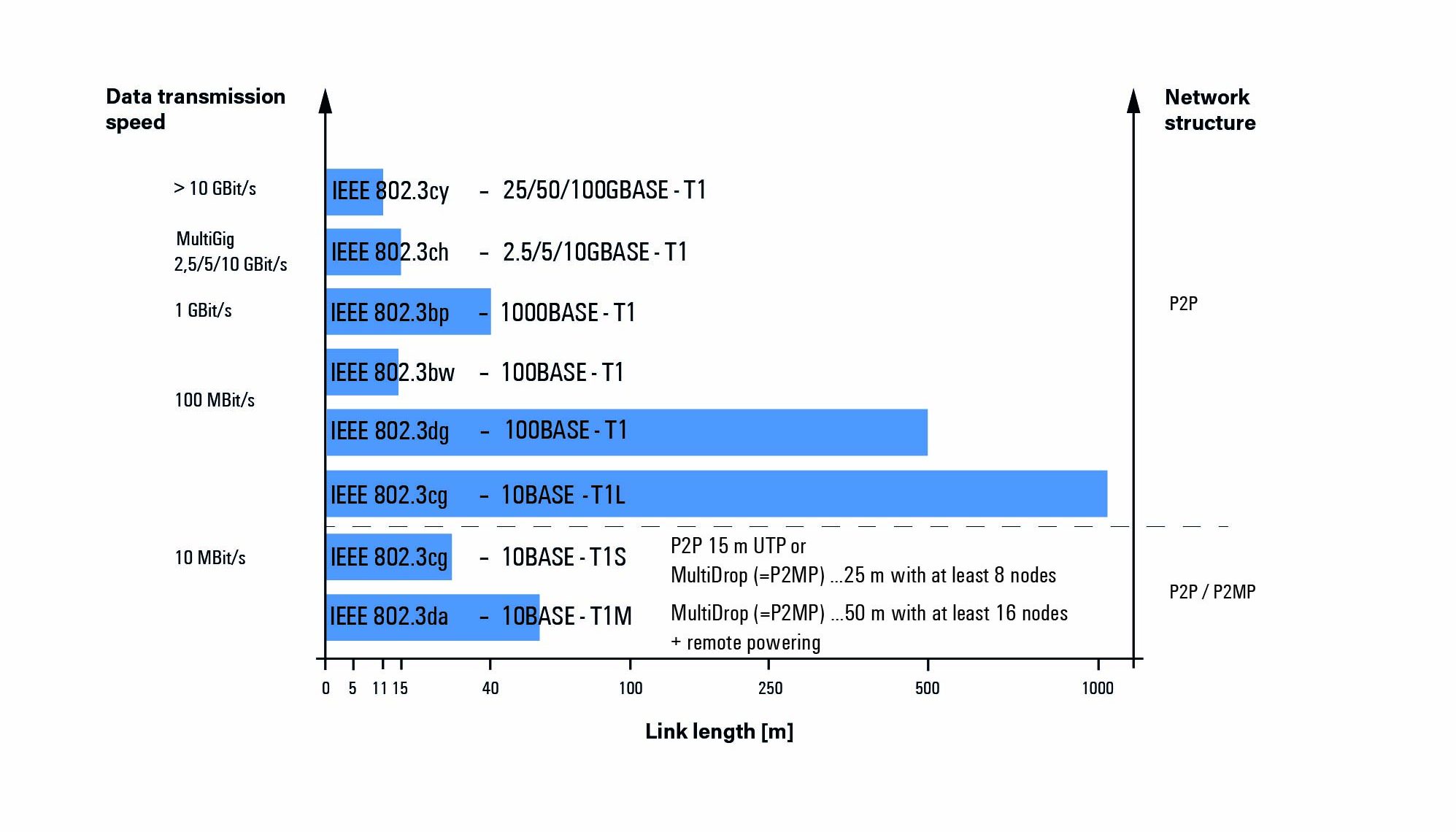
The following diagram provides an overview of the various SPE protocols. These standards differ in their transmission speeds and distances, ensure interoperability, and provide guidelines for the development of compliant products.

Overview of IEEE802.3 SPE protocols

Further SPE standards in progress
Übersicht IEEE802-3 Protokolle für Gerätehersteller

The most important standards for the industry at present are 10BASE-T1L, which supports a transmission speed of 10 Mbit/s over cable lengths of up to 1,000 m, and 10BASE-T1S for multidrop applications. 100BASE-T1 enables 100 Mbit/s over distances up to 100 m, and 1000BASE-T1 even enables 1 Gbit/s over distances up to 40 m. Once it becomes available, it is estimated that 100BASE-T1L (IEEE 802.3dg) will also be very important for the industry. The IEC standard IEC 63171 addresses the standardization of connection technology and requirements for SPE connectors and covers electrical and transmission characteristics as well as various mating interfaces.

In addition, the MICE concept (Mechanical, Ingress, Climatic, and Electromagnetic) is integrated into the standard, which addresses environmental conditions and areas of application. Recently, the international automation communities have emphasized the need for a standardized connector for Single Pair Ethernet, which has been submitted for international standardization based on key application requirements. By agreeing on a uniform connector interface for Single Pair Ethernet, the industry is now taking an important step toward the future.

IEC 63171-7 Portfolio Weidmüller

To support equipment manufacturers in adopting SPE, Weidmüller has adapted its product portfolio to the new IEC 63171-7, Edition 2, standard. This harmonized interface provides a uniform mating face geometry for IP20, IP67, and hybrid connectors, thereby enabling seamless interoperability between different manufacturers and network devices.
Compliance with IEC 63171-7 (Ed. 2) not only ensures that devices meet all necessary certification requirements but also reduces development risks, simplifies planning, and accelerates time to market. For PROFINET over SPE, IEC 63171-7 is already recognized as a standard and provides clear guidelines for device and system manufacturers. At the same time, organizations such as PROFINET International, ODVA, the OPC Foundation, and the FieldComm Group are driving forward unified SPE standardization—including PoDL power classes and standardized connectors—to ensure interoperable, vendor-neutral solutions from the field level all the way to IT.

This standardization creates market certainty and gives device manufacturers the assurance that SPE-based designs developed today will remain compatible with future network infrastructures.

3. What are the benefits of SPE for device manufacturers?

Manufacturers of industrial equipment are responsible for the entire lifecycle of their products, from research and development through design and prototyping to production, quality control, and sales. They must comply with industry standards and regulatory requirements and ensure that their products are safe, reliable, and meet their customers’ needs. As Single Pair Ethernet becomes increasingly established in industrial and commercial applications, the technology offers equipment manufacturers the opportunity to design their products to be future-proof and meet the evolving demands of modern network infrastructures.

The use of a single twisted-pair cable in device development offers numerous advantages, particularly when designing more compact and lightweight devices. Compared to traditional RJ45 connectors, SPE components require only 67% of the installation space, allowing up to 33% more ports to be accommodated on the same printed circuit board. This is particularly advantageous in areas where space and weight play a critical role, such as in the automotive industry, aerospace, and industrial applications. At the same time, SPE simplifies PCB routing, as only two signal traces are required instead of four wire pairs. This frees up additional space on the PCB.

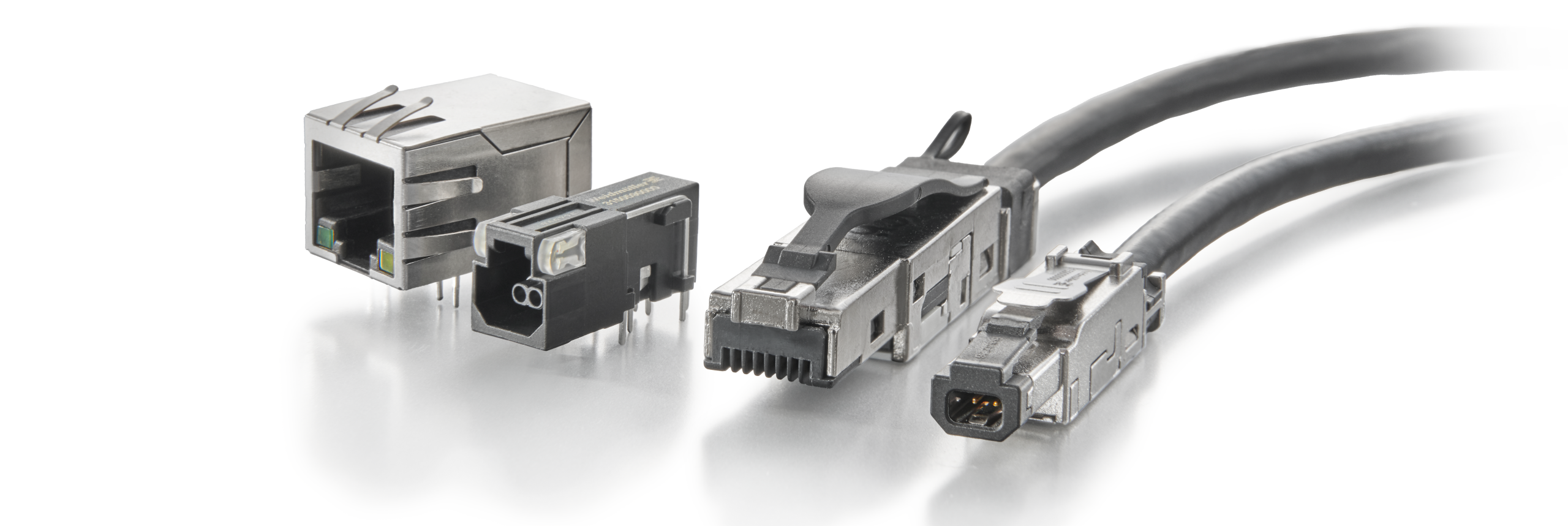
SPE to RJ45 size comparison

4. What prospects do SPE applications offer device manufacturers?

As automation advances, the number of networked sensors and actuators in manufacturing is increasing. Single Pair Ethernet enables end-to-end, scalable, and real-time Ethernet communication from the individual sensor/actuator level all the way to the cloud.

SPE offers numerous application possibilities, particularly in scenarios where intelligent devices communicate, measure, or monitor. Typical applications include barcode readers, cameras, operator terminals, and detection sensors. In industrial automation, SPE enables communication over long distances of up to 1,000 m without the need for additional gateways. This results in end-to-end, interoperable networks that simplify system architecture and enable efficient data acquisition.

Thanks to PoDL (Power over Data Line), data and power can be transmitted simultaneously over the same pair of wires, eliminating the need for separate power supply lines. This reduces cabling effort and infrastructure costs and contributes to faster and more reliable process control as well as higher system availability.

Single Pair Ethernet offers significant advantages in the miniaturization of communication infrastructure and enables the development of high-performance, compact robotic systems, particularly in the field of end-of-arm tools. SPE supports high-resolution 2D and 3D image processing systems with data transfer rates of up to 1 Gbit/s over distances of up to 40 meters. Compared to conventional communication solutions, SPE offers higher bandwidth and enables efficient communication between the robot arm and the controller, even when handling large amounts of data.

Thanks to PoDL (Power over Data Line), data and power can be transmitted over a single pair of wires. This simplifies cabling along the robot arm and allows for more flexible placement of devices. Furthermore, SPE cables have smaller bend radii compared to conventional automation cables, which allows for a reduction in the dimensions of robotic arms and systems. The combination of high data rates, integrated power supply, and compact cabling improves the performance and design flexibility of modern robotic systems and supports efficient, space-saving installations in automated production environments.

In the process industry, there is a growing need for Ethernet-compatible interfaces to access field data via the IIoT. The challenge lies in the fact that information from sensors and devices in the field is required, and long distances must be bridged. In addition, various IIoT devices must be integrated into the network infrastructure.

Single-pair Ethernet for the process industry is known as Ethernet-APL, a specialized variant of the 10Base-T1L standard enhanced with functional safety, which enables certified components to operate at 10 Mbit/s with simultaneous power delivery over twisted-pair cables up to 1,000 m.

Ethernet-APL (Advanced Physical Layer) technology enables direct access down to the field and device level via an internationally standardized two-wire solution. This requires high-performance IIoT devices with high-quality components. This ensures higher plant availability and facilitates the generation of production data: Device data can be collected, utilized, and analyzed directly in the field to optimize plant availability and implement new solutions.

The integration of the Internet of Things (IoT) into building automation has become a central component of digital transformation and is expected to grow in importance in the future. The adoption of the IP protocol simplifies building automation and makes it more effective, as sensors, controllers, and other building technologies can be seamlessly connected to the building management system, even over long distances. This approach replaces traditional proprietary fieldbus systems with standardized Ethernet cabling, thereby eliminating the need for expensive and time-consuming programming. The use of Single Pair Ethernet eliminates the need for additional gateways.

In the planning and development of smart buildings, there is a clear trend toward minimizing the energy consumption of all connected devices. Single Pair Ethernet plays a crucial role in this context, enabling the simultaneous transmission of high-performance data and power over a single pair of wires using Power over Data Line (PoDL). Furthermore, SPE components—including connectors and cables—are designed to be durable and efficient. SPE enables the seamless integration of building systems such as lighting and HVAC.

In addition, it ensures security within a unified network that is easy to install and maintain.The ability to support various transmission distances and rates, combined with high packing density, makes this connectivity technology extremely adaptable for virtually any system. SPE is transformative for IoT device connectivity. This is essential for applications such as smart grids, smart cities, and building automation.

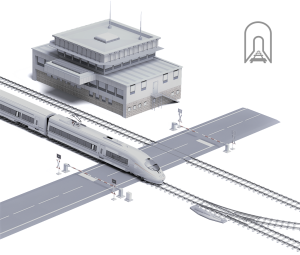
Thanks to its ability to transmit data over longer distances than conventional Ethernet, Single Pair Ethernet also offers numerous advantages for infrastructure applications. With 10BASE-T1L, SPE enables data transmission rates of 10 Mbit/s over distances of up to 1,000 meters. This is particularly beneficial for large-scale infrastructure projects such as tunnels and level crossings, where long transmission distances and reliable data communication are essential. Typical applications include signal and drive control, power supply, sensor technology, and device connectivity. In extensive installations, such as trackside systems or traffic control networks, SPE simplifies complex cabling.

By transmitting data and power simultaneously over a single pair of wires, SPE also simplifies the installation and maintenance of devices such as sensors and cameras in traffic control and monitoring systems. Its compatibility with existing Ethernet-based systems enables seamless integration into existing network infrastructures and supports real-time data exchange and monitoring. Furthermore, SPE's scalability makes it easier to expand existing infrastructures, as additional devices and increasing data requirements can be accommodated without extensive modifications to the existing network infrastructure.
Transportation

Single Pair Ethernet also offers numerous advantages for the energy sector. Thanks to its ability to transmit data at high transmission rates over long distances, SPE is particularly suitable for monitoring and controlling remote energy facilities such as wind turbines, solar farms, and substations.

With PoDL (Power over Data Line), data and power can be transmitted over a single pair of wires. This simplifies the connection of smart grid devices, sensors, and actuators and facilitates the integration of IoT technologies. At the same time, SPE enables real-time data exchange and monitoring. This supports efficient energy management and predictive maintenance, contributing to the stability and reliability of the power supply.

Windpark_CTC

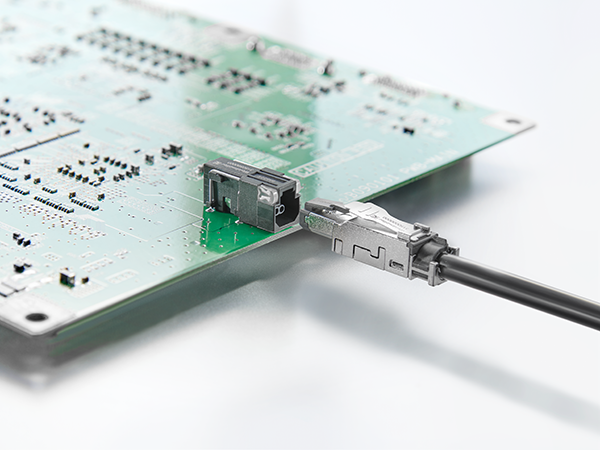
PCB with SPE socket and connector

5. What should be considered when designing SPE devices?

When developing SPE-compatible products, manufacturers should consider several aspects related to components, standards compliance, system architecture, and testing. SPE connectors are smaller and simpler in design than conventional Ethernet connectors, helping to reduce PCB space requirements and costs. At the same time, they must be designed to ensure robustness and reliability in their respective operating environments. The IEC 63171 series of standards defines various connector types and enables the use of standardized components for reliable data transmission.

The reduced number of signal traces allows for more compact PCB layouts and simplifies PCB design. High coplanarity, precise pin tolerances, and tapered contact pins, as used by Weidmüller in its connectors, support reliable automated PCB assembly. At the same time, the RJ45-like feel and handling of SPE connectors make installation and maintenance easier.

To ensure reliable data transmission, SPE devices must maintain high signal integrity. This includes controlled impedance, optimized shielding, and carefully designed creepage and clearance distances. These measures enable stable communication even over long distances and in industrial environments with high levels of electrical interference. Particularly in industrial applications, compliance with electromagnetic compatibility (EMC) requirements is essential to ensure reliable operation and support real-time data acquisition.

Efficient power management is also important when developing devices with PoDL (Power over Data Line). By transmitting data and power simultaneously over a single pair of wires, cabling can be simplified and the number of required connectors reduced. Device manufacturers must select the appropriate PoDL class and ensure that power supply and data transmission are reliably coordinated. This enables compact device architectures while maintaining high performance and operational reliability.

The selection of suitable cables and electronic components also plays a key role. SPE-specific cables are designed to support high data rates and power transmission over longer distances while minimizing interference and signal loss. Their smaller bending radius can also facilitate the development of more compact devices. Choosing suitable Physical Layer components (PHYs) and transceivers that comply with SPE standards is essential for converting digital data into electrical signals. Ethernet controllers must also support SPE technology to ensure efficient data processing and compatibility with the required protocols.

Suitable network components, such as switches and routers, are also required for integration into existing network infrastructures. These must support SPE to enable seamless communication and efficient data routing. For 10BASE-T1L applications, Weidmüller offers dedicated switches designed to meet the requirements of SPE.

Finally, comprehensive testing and certification are required to ensure compliance with SPE standards. These processes help verify device performance under various operating conditions and confirm interoperability and reliability. By using standardized components and conducting appropriate testing, device manufacturers can ensure long-term stable operation and cross-manufacturer compatibility of their products.

6. What are the future trends and developments?

Building on its existing IEC 63171-2 portfolio, Weidmüller will expand its SPE offering with IEC 63171-7-compliant components by mid-2026. The portfolio is aimed at industrial device manufacturers and system integrators, offering solutions for both IP20 and IP67 applications.

The portfolio includes PCB sockets and connectors, IP20 patch cables, IP67 circular connectors, field-attachable IP20 connectors for on-site installation, and new switches to support SPE networks and 10BASE-T1L applications. Future portfolio expansions will include M8 connectors, additional PCB connectors, panel feed-throughs, DIN rail connections, media converters, and further network infrastructure components. This will enable manufacturers to gradually adopt the new standard while ensuring compatibility with existing SPE solutions.

By expanding its portfolio in accordance with IEC 63171-7, Weidmüller supports manufacturers in developing future-proof, flexible, and reliable devices, simplifies integration, and accelerates the design-in process.

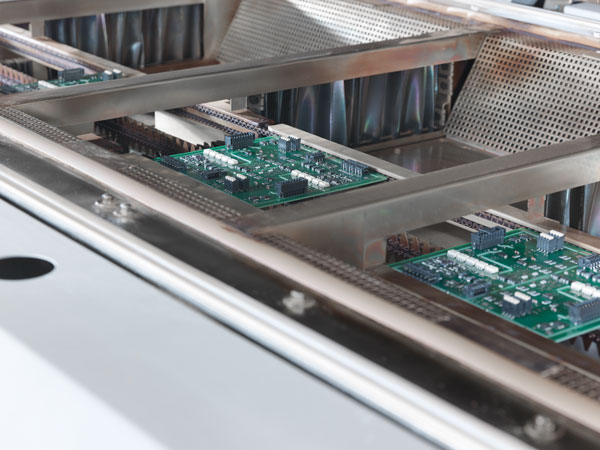
SMT Process Reflow Oven

7. Conclusions and key-takeaways

Single Pair Ethernet represents a significant advancement in Ethernet technology and is becoming increasingly important across numerous industries. In particular, SPE opens up new opportunities for device manufacturers to drive innovation and maintain long-term competitiveness. As the technology continues to evolve, higher data rates, enhanced power transmission capabilities, and further miniaturization of connectors and components can be expected. This will make SPE an attractive option for an increasing number of applications.

As SPE-compatible devices become more widespread, the technological ecosystem continues to grow. This encourages the further development of existing solutions and lays the foundation for new applications and systems. Thanks to its flexibility and efficiency, SPE is suitable for a wide range of applications, from automotive networks and industrial automation to the process industry, building automation, IoT applications, and smart grids. The technology thus supports the development of compact, energy-efficient, and high-performance devices across various industries.

Standardization of SPE interfaces is a key factor in driving wider adoption. With IEC 63171-7, device manufacturers have access to a uniform standard that simplifies the development of compatible products and provides long-term planning security. Support from industrial communication protocols such as PROFINET enables integration into existing and future network infrastructures. Manufacturers that integrate SPE into their products at an early stage can gain competitive advantages and actively shape the development of new generations of devices.

In addition to providing suitable products, Weidmüller supports device manufacturers with comprehensive resources for the design-in process. These include 3D models, sample components, technical drawings, STEP and EDA data, and soldering profiles. Weidmüller also offers expert advice on selecting suitable connectors, cabling, PoDL integration, and system architecture. This simplifies SPE implementation, shortens development cycles, and supports the development of reliable, interoperable devices for industrial applications.

In summary, Single Pair Ethernet offers significant advantages for device manufacturers and users, laying the foundation for the next generation of connected devices.

Here you can download and share the whitepaper.

Send a friend

Email
LinkedIn

Become a partner now!